Send a CV that answers the posting, requirement by requirement.
Paste it, and the posting becomes a list of requirements with your own history marked against each one. The rewrites come back one part of your CV at a time, and you accept, edit, or reject each one.
Free: 3 applications a month, no card. Paste the posting as text, up to 50,000 characters. A link works too.
xadaro.com/applications
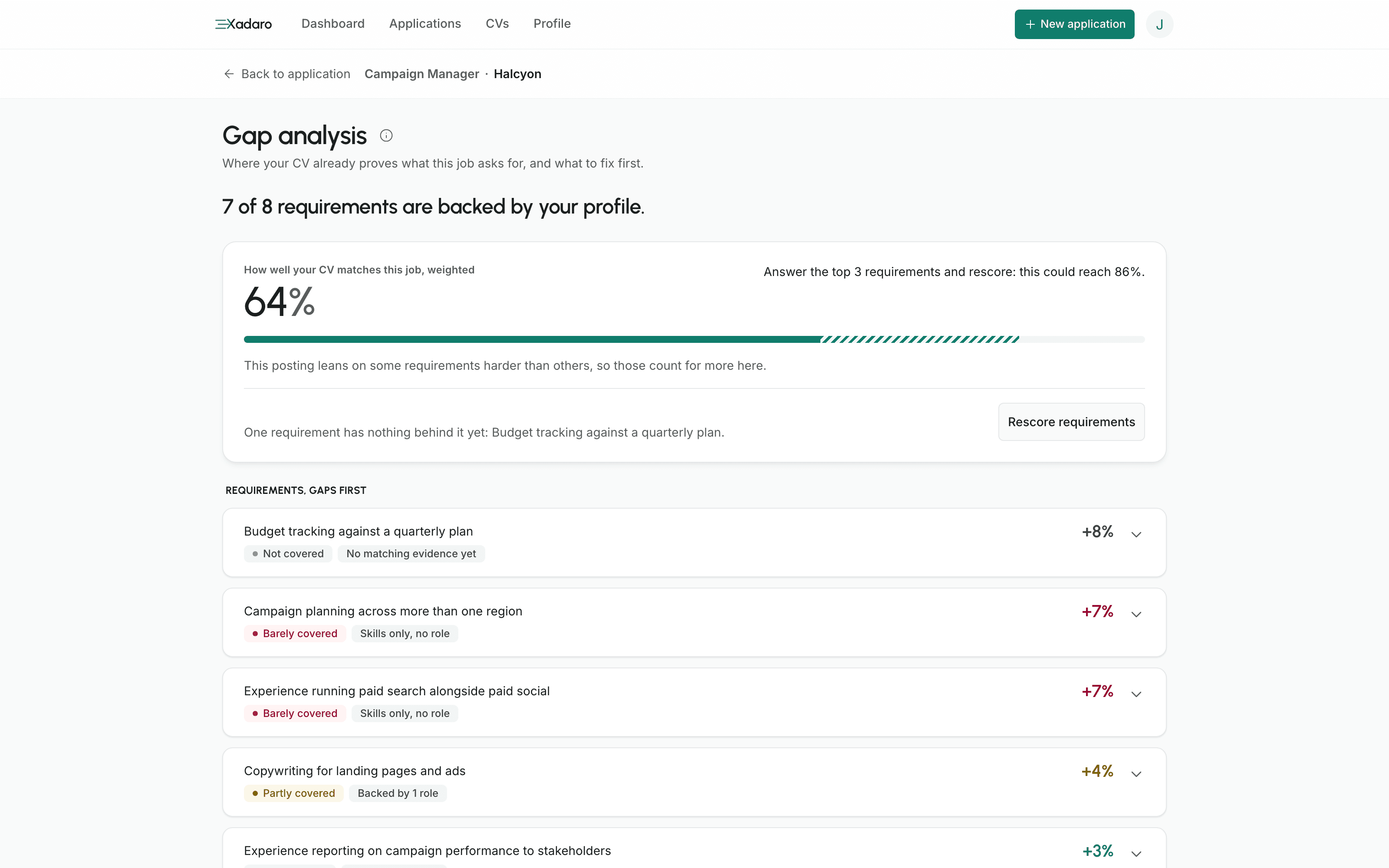
4 steps from a pasted posting to a CV you can send
See where your experience already fits, where it needs more detail, and which changes are worth making.
The posting becomes a list
Paste the text or URL, then check the requirements, responsibilities, preferred qualifications, and keywords Xadaro finds.
Each requirement gets a verdict
Each requirement is marked Well covered, Partly covered, Barely covered, or Not covered. Open its row in the gap analysis to see the roles and skills it names.
Rewrites come back per section
Each suggestion targets one part of your CV. Where it answers a requirement, it names it. Compare it with your original before you decide.
You decide
Accept, edit, or reject each suggestion. Approved changes go into a job-specific copy, while your profile stays untouched.
The letter and the prep come from the same decisions
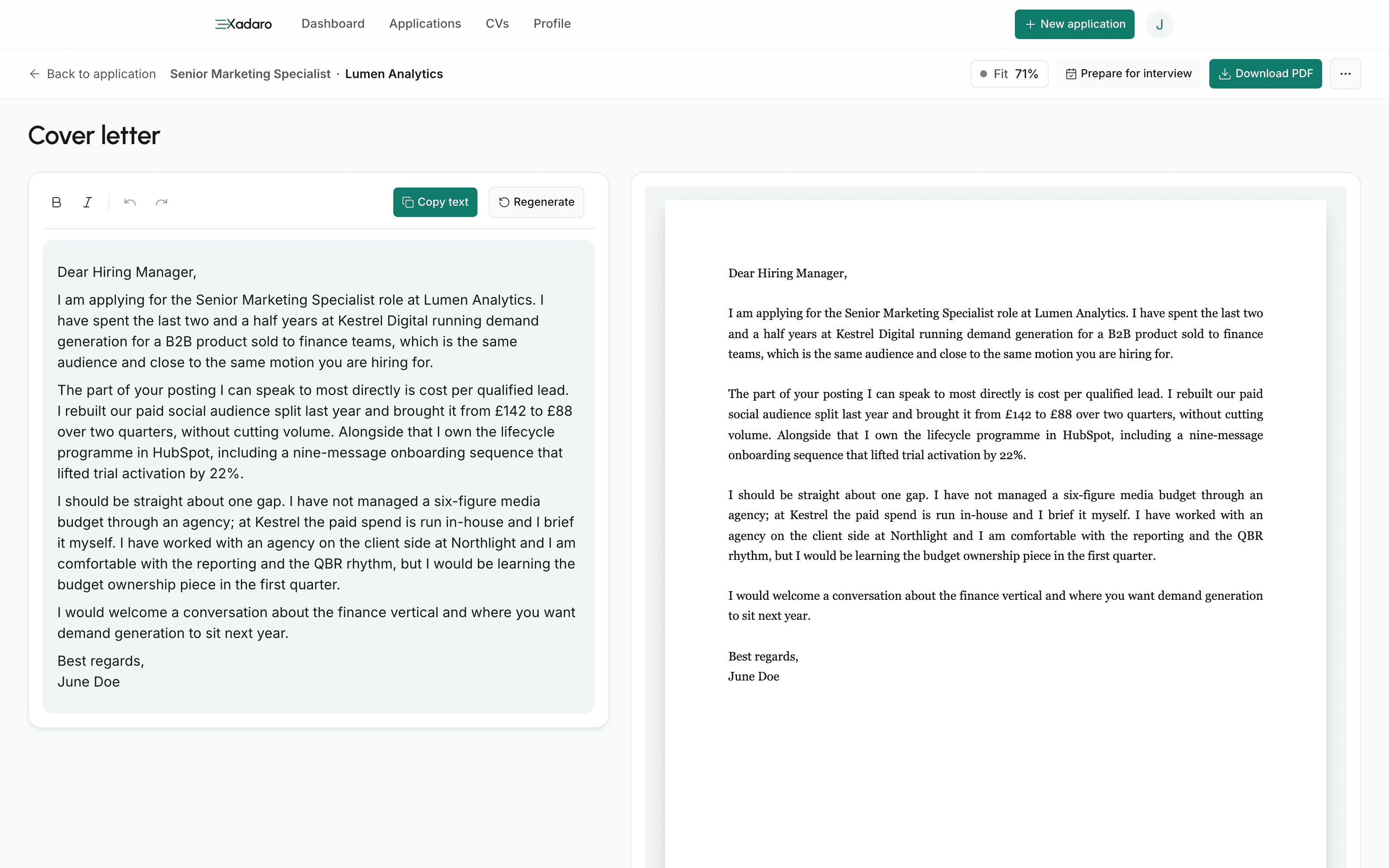
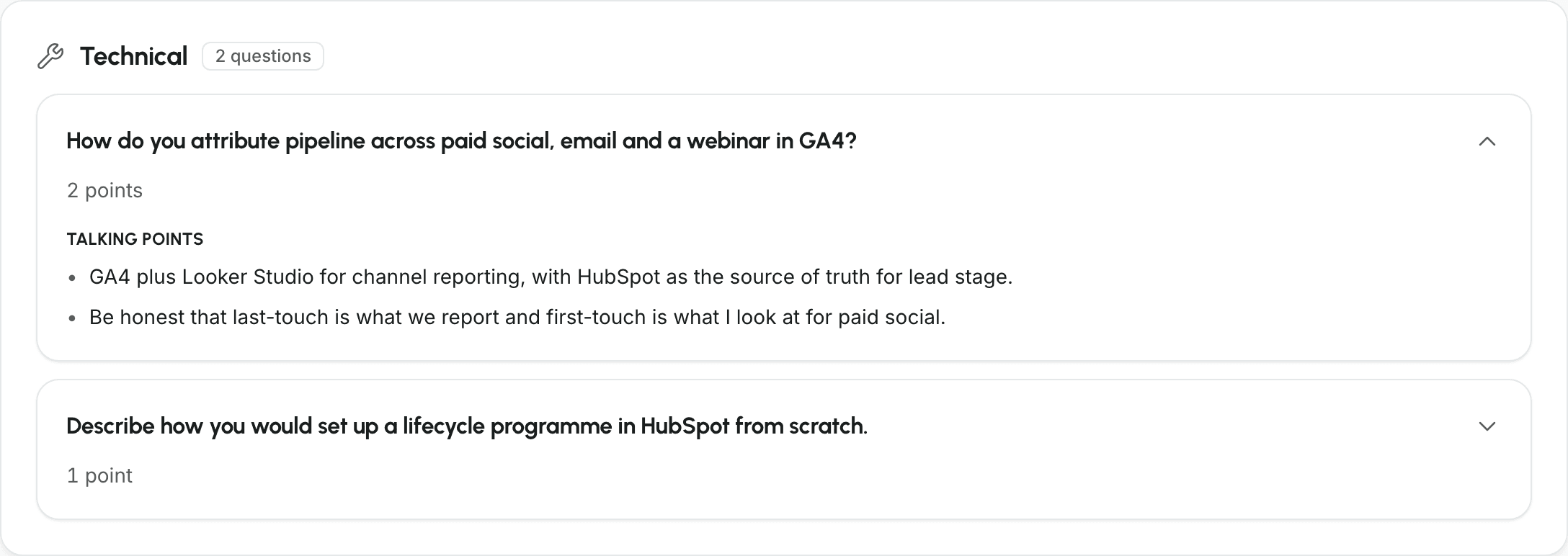
Your approved CV changes also shape the cover letter. Interview prep uses the same posting and CV to draft likely questions, talking points, and STAR stories.
xadaro.com/applications
The score, and the 5 checks behind it
This is Xadaro's own check: how machine-readable your tailored CV is, and how well it covers this posting. The score is out of 100: required sections 30, keyword coverage 30, parseable dates 20, contact block 15, and machine-readable structure 5. Partial checks earn half points, rounded up. Both plans include the score, and Pro adds a separate recruiter-style review.
Tuned to your career, not to everyone's
Every suggestion is built from your own profile, this posting, and any career context you added. Your goals steer which of your evidence gets foregrounded, and the tailoring is told to treat a stated goal as context, never as something you have already done.
Questions about tailoring
Paste the text instead. Fetching a URL runs a real browser, so postings that only render with JavaScript are still read, but some job boards block it outright. Pasting always works.
3 applications a month on the Free plan, and each application is one tailored CV, one cover letter, and interview prep. There are hourly limits too. Requirement matching, tailoring, the cover letter, interview prep, and the CV score share one hourly limit between them. The CV review, fix drafts, rescores, writing suggestions, and interview answers each have a limit of their own, and the tightest of all of them is 6 runs an hour. Those features also share one limit of 10 requests a minute. Pro removes the monthly cap and raises most of the hourly limits.
Edit it before you accept, or reject it. A decision is not final: a decided suggestion stays in the list with a control to reopen it, so you can move between accepted, edited, and rejected while you work through the set.
They're drafted from your history and this posting, not from a stock template. Where a rewrite changes text you wrote, your original is marked up beside it. Keep your own phrasing wherever it was better: you can edit any suggestion before accepting it.
The requirement comes back Not covered and stays that way. Nothing quietly rewrites it into your history. Sometimes it is pointing at a real project or course you left out. Add it from that requirement's row in the gap analysis, rescore, and the verdict changes honestly. Sometimes it is telling you this role wants something you don't have, which is worth knowing before you spend the evening.
No, and nothing here is going to suggest otherwise. Well covered means your CV for this role carries clear evidence for that requirement under Xadaro's own matching. Who gets called depends on the other applicants, the budget, whether there was an internal candidate, and a dozen things nobody outside that company can see. The verdicts are about your evidence, not your odds.